
Economics University in Pakistan: From Economics Studies to Career Paths at BNU
Sep, 23 2026

Pakistan's economy grew 3.7% in FY2025-26, the fastest pace in four years, according to the Pakistan Economic Survey 2025-26, published by the Ministry of Finance, Government of Pakistan.
That kind of growth doesn't explain itself. Someone has to track it, question it, and turn it into policy. Pakistan needs graduates who understand markets, read data correctly, and can trace how a shift in interest rates or trade policy moves through the wider economy.
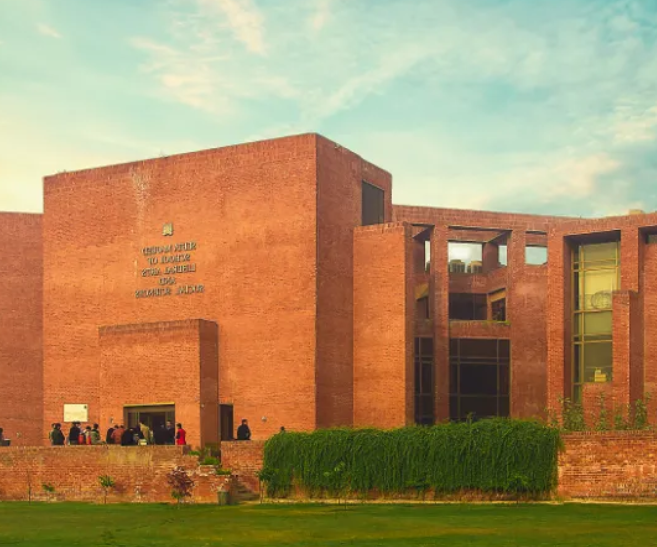
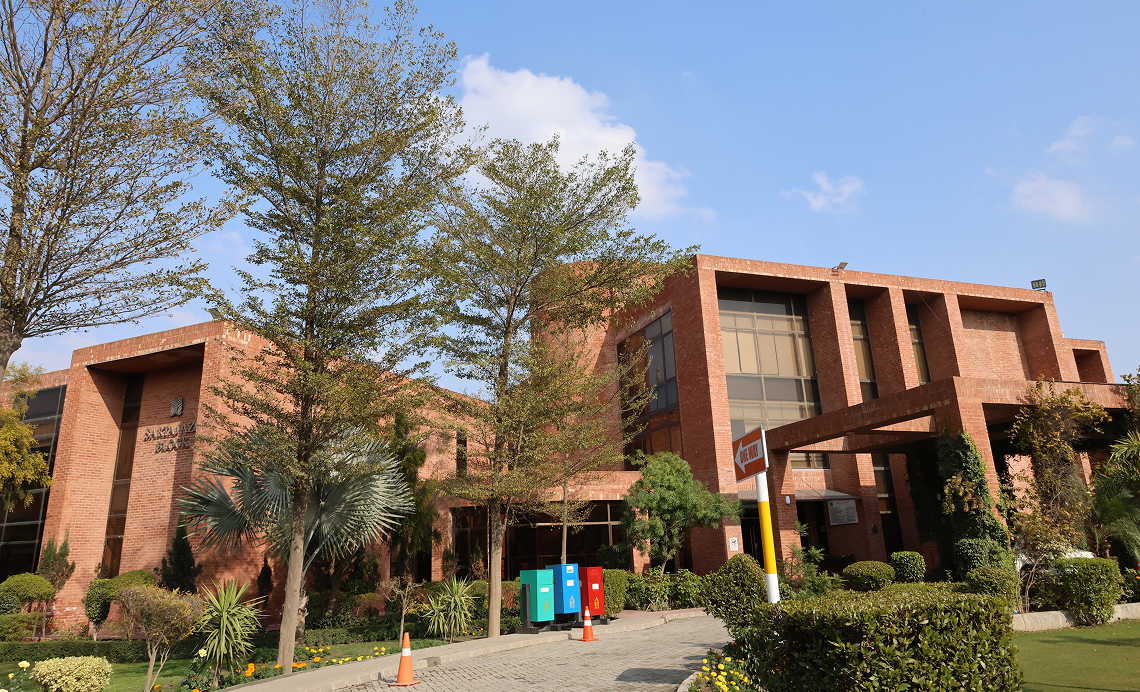
Beaconhouse National University (BNU) in Lahore runs its economics education through the School of Management Sciences (SMS). SMS offers three separate BS Economics pathways. Each one builds on the same core economics training, then branches into a different specialization.
Key Considerations for Studying Economics in Pakistan
When researching the best university for economics in Pakistan, a few factors decide whether a program actually prepares you for real-world work. Here’s an overview of what makes a program stand out.
| What to Check | Why It Matters |
|---|---|
| Breadth of the curriculum | A strong program covers microeconomics, macroeconomics, econometrics, and development economics, not just the basics. |
| Quantitative training | Statistics, mathematics, and applied econometrics should sit at the core of the degree, not on the sidelines. |
| Finance exposure | Studying financial markets and instruments alongside core theory prepares you for banking and investment roles. |
| Data analytics | Coding, data visualization, and machine learning tools are now standard in economists' toolkits. |
| Research opportunities | Research centers and faculty-led projects give students hands-on exposure beyond the classroom. |
| Internship structure | Supervised work experience built into the degree carries more weight than internships left up to the student. |
| Academic structure | Credit hours, elective load, and room to shape your own path all shape how the degree fits your goals. |
| Student support and scholarships | Available, accessible financial aid changes who a program is actually within reach for. |
| Career pathways | Where past graduates end up working shows what the degree actually leads to. |
BNU's economics programs, through SMS, cover each of these areas with documented coursework, named faculty, and a dedicated policy research center.
The School of Management Sciences at BNU: Economics and Beyond
SMS is the academic home for economics at BNU, sitting alongside business and hospitality management programs. Within SMS, the economics department runs three undergraduate degrees and draws on faculty with backgrounds in policy research and applied economics.
The department's faculty includes Prof. Dr. Hafiz A. Pasha and Dr. Akmal Hussain, both of whom have shaped economic policy in Pakistan, along with Mr. Ijaz Hussain and Mr. Omar Naeem. Students also have access to the BNU Center for Policy Research (BCPR), where they can work on internships and research projects tied to real economic issues, not just classroom case studies.
Economics Programs and Academic Pathways at BNU
BS Economics
BS Economics runs 135 credit hours across 48 courses over eight semesters, plus a summer internship. Students start with foundational courses in microeconomics, macroeconomics, and mathematics, then move into intermediate and advanced theory.
By the fifth and sixth semesters, the program shifts toward applied and quantitative work: Econometrics I and II, Introduction to R, International Trade, and Advanced Macroeconomics. The final two years add Environmental Economics, Intro to Python, Research Methodology, Public Finance, Data Visualization, and Monetary Economics, along with a required thesis.
BS Economics and Finance
BS Economics and Finance runs 144 credit hours, the longest of the three tracks, because it layers finance courses onto the standard economics core. Students take the same foundational microeconomics and macroeconomics sequence as BS Economics, but the elective load shifts toward finance: Digital and Islamic Banking, Business Finance, Financial Management and Islamic Finance, Financial Statement Analysis and Reporting, Cost and Managerial Accounting, and Financial Modelling.
Later semesters add Financial Instruments, Markets and Institutions, Risk Management, Investment Portfolio and Analysis, Fintech and Digital Finance, and Strategic Corporate Finance.
BNU structures the electives so students can effectively build a second specialization in finance while still graduating in four years.
BS Economics with Minor in Data Analytics
BS Economics with Minor in Data Analytics runs 138 credit hours and pairs the standard economics major with a four-course minor in data sciences and business analytics. The minor includes Introduction to Data Science, Fundamentals of Machine Learning, Introduction to Big Data Analytics, and Applied Economics with Data Science, plus Machine Learning for Business Analytics, Management Information Systems, Business Analytics, and Business Intelligence and Data Visualization.
BNU describes this as a program for students who want to work in market-based research, project design, and policy analysis where quantitative skills carry weight. It's the newest of the three tracks, aimed at students who want their economics degree to double as technical training.
Admissions for Economics Programs at BNU
All three programs share the same minimum eligibility: F.A/F.Sc or equivalent with 50% marks, or eight pass subjects at O-Level plus three pass subjects at A-Level (HSD and IB equivalents also accepted). Admission decisions weigh your academic record, your score on BNU's admission test, and an interview conducted by the economics department.
The application runs entirely online, through BNU's admission portal. You submit the form, upload attested educational documents as scanned PDFs, and pay a non-refundable Rs. 4,000 application processing fee through a UBL Bank deposit or the Blinq app. No campus visit is required.
Admission dates change with each intake. BNU currently has its Fall 2026 regular admissions cycle underway, with merit lists announced separately by school. Since these dates shift every year, check BNU's admissions schedule page directly for the current intake rather than relying on a fixed date here.
BNU Economics Fees and Other Study Costs
For the 2026–27 academic session, all three economics programs share the same fee structure:
- Per semester tuition: Rs. 321,000
- Admission form processing fee (one-time): Rs. 4,000
- Admission fee (one-time): Rs. 30,000
- Security deposit, refundable (one-time): Rs. 35,000
- Medical insurance (per semester): Rs. 2,000
- Activity charges (per semester): Rs. 11,000
Students living in BNU's hostels pay separately: a refundable one-time security deposit of Rs. 25,000, plus Rs. 132,000 per semester for on-campus accommodation or Rs. 106,000 for outside-campus arrangements. Optional room appliances (refrigerator, electric heater, air conditioner) cost extra per semester.
These figures apply to the 2026–27 session and change yearly with Board of Governors approval, so confirm current numbers on BNU's fee structure and policy page before budgeting.
Scholarships and Financial Support at BNU
BNU runs several scholarship tracks for undergraduates, including economics students. Coverage and eligibility vary:
- VC Scholarship: 100% coverage, for applicants with 3A* at A-Level or 90%+ in Intermediate, plus a personal statement. Retaining it requires a minimum department-set CGPA.
- Dean's Scholarship: 100% coverage, based on a weighted formula: 35% Matric/O-Level score, 35% Intermediate/A-Level score, 30% BNU admission test, interview, and portfolio. Applicants need an aggregate above 80% to qualify.
- Merit-Based Scholarship: up to 75% coverage. 90%+ in FA/FSc or 3 A's at A-Level gets 75%; 80%+ or 2 A's gets 50%.
- Need-Based Scholarship: up to 50% coverage, for students from low-income families, subject to verification. It renews each semester if the student maintains a 2.65 CGPA.
- Sports Scholarship: 50% coverage for two male and two female applicants who've won national or provincial medals, contingent on a 2.5 CGPA.
- Transgender Inclusion Scholarship: 50% coverage for two selected applicants with a valid CNIC marked category X, plus a hostel stipend for out-of-station students.
- BNU Institutional Support: 25% coverage for students from public sector, non-profit, or trust schools with 75%+ scores at both Matric/O-Level and Intermediate/A-Level.
BNU states it has disbursed over Rs. 1.1 billion in scholarships across two decades. Not every applicant qualifies for every scholarship, and coverage depends on yearly funding, so check BNU's scholarships page for current eligibility and deadlines.
Student Facilities and Campus Resources at BNU
Economics students have access to the same campus infrastructure as the rest of the university:
- The Library: for research and coursework support.
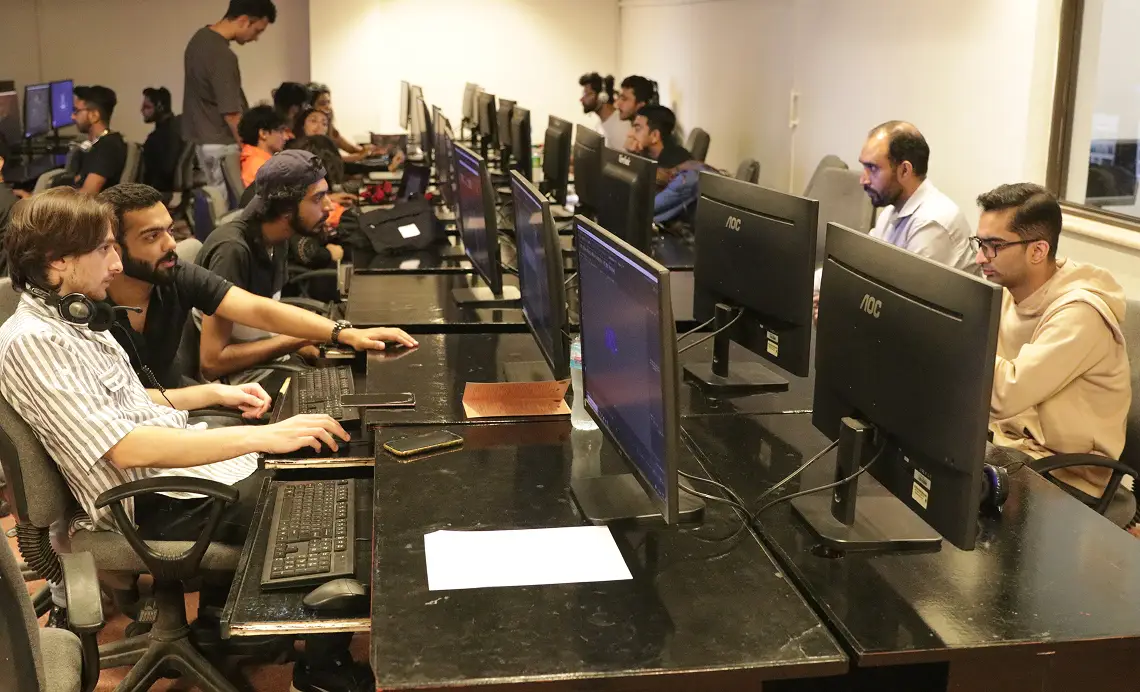
- The IT Resource Center: for computing needs tied to statistical software and coding work in the data analytics track.
- The Career Development Office: supports internship placement and job search after graduation.
- The Student Affairs Office and Counseling Center: for academic and personal support.
- Hostels: both on-campus and off-campus, for out-of-station students.
- The Health Center: for on-campus medical care.
- Societies, clubs, and sports facilities (including B.Fit): for extracurricular involvement.
The Career Development Office matters most for economics students specifically, since it's the office that connects coursework and internships to job placement after the degree.
Career Opportunities After an Economics Degree at BNU
BNU lists the same set of career directions across all three economics programs, drawn from where past graduates have gone:
- Banking and Financial Sector: Graduates work in commercial banks, investment houses, and financial services, particularly those from the BS Economics and Finance track given its coursework in financial instruments and risk management.
- Research and Policy: Graduates pursue roles at research organizations, supported by access to BCPR during their degree.
- Regulatory and Planning Institutions: BNU names regulatory bodies and planning and development institutions among its stated career areas.
- Commerce and Industry: The private sector, from local firms to multinational corporations, is a stated pathway across all three tracks.
- NGOs and Development Organizations: Non-governmental organizations are listed as a career direction, tied to the development economics coursework in the core curriculum.
For BS Economics and Finance graduates specifically, BNU adds financial consulting and investment banking, tied directly to the program's finance electives.
BNU does not publish employment rates, starting salaries, or placement guarantees for its economics graduates, and none of those figures appear here either.
Why BNU Deserves Consideration for Economics in Pakistan
BNU runs its economics education through SMS, with faculty who've worked in Pakistani economic policy, a dedicated research center in BCPR, and three degree structures that let students specialize in finance or data analytics without leaving the economics major.
The curriculum across all three tracks pairs core economic theory with quantitative training: statistics, econometrics, and coding in R and Python. Admissions, fees, and scholarships follow a documented, published structure, and the campus offers the support infrastructure, from a career office to hostels, that a four-year undergraduate degree requires.
Whether BNU fits you depends on your own priorities: the specialization you want, the fee structure you can manage, and the career direction you're aiming for. The sections above lay out what's documented, so you can weigh it against other economics programs in Pakistan.
FAQs
Is BNU among the universities offering Economics in Pakistan?
Yes. BNU offers economics education through its School of Management Sciences, with three separate undergraduate tracks.
Which Economics programs does BNU offer?
BNU offers BS Economics, BS Economics and Finance, and BS Economics with Minor in Data Analytics.
What is the duration of BS Economics at BNU?
Four years across eight semesters, totaling 135 credit hours.
What is the difference between BS Economics and BS Economics and Finance at BNU?
BS Economics and Finance adds finance-specific coursework, like financial modelling, risk management, and investment portfolio analysis, on top of the standard core, extending the degree to 144 credit hours.
Does BNU offer Economics with Data Analytics?
Yes. BS Economics with Minor in Data Analytics pairs the economics major with a four-course minor in data science, machine learning, and business analytics, totaling 138 credit hours.
What are the admission requirements for Economics at BNU?
F.A/F.Sc or equivalent with 50% marks, or eight pass O-Level subjects plus three pass A-Level subjects, along with a passing score on BNU's admission test and interview.
Does BNU offer scholarships for Economics students?
Yes, including the VC Scholarship, Dean's Scholarship, Merit-Based and Need-Based Scholarships, and targeted awards like the Sports Scholarship, with coverage ranging from 25% to 100% depending on eligibility.
What career opportunities are available after studying Economics at BNU?
Banking and finance, research organizations, regulatory bodies, planning institutions, NGOs, and commerce and industry, with BS Economics and Finance graduates also positioned for investment banking and financial consulting.