
Fine Arts Education in Pakistan: Choosing the Right University, Program & Career Path
Sep, 23 2026
Fine Arts education in Pakistan has moved well beyond drawing and painting classes. The HEC's revised Fine Arts curriculum now combines studio practice with art history, criticism, curatorial studies, and AI-integrated art practices. It lists painting, sculpture, photography, textile design, and digital art among the streams a Fine Arts degree can cover.
That range can make choosing a university more challenging. Beaconhouse National University (BNU) is one of the universities students may encounter when researching Fine Arts education in Pakistan.
This article outlines what to consider when choosing a Fine Arts university, then looks at what BNU offers so you can assess it based on your own academic and creative priorities.
What to Look for in a Fine Arts University
A Fine Arts degree asks a lot of a university. It needs a curriculum that balances theory and practice, usable studio space, faculty who can guide serious work, and a support system that helps students finish strong.
Here's what to check for on each front.
A relevant Fine Arts curriculum
Look at how the curriculum splits between theory and studio work, and whether it lets you build toward a personal artistic practice rather than just completing assignments. A strong Fine Arts program in Pakistan usually moves students through a foundation year, then toward increasingly independent studio work.
Studio and practical learning
Fine Arts is a hands-on subject. Reading about painting or sculpture only goes so far. Check how many studio hours the program requires and whether students get one-on-one time with instructors during that work, not just group lectures.
Faculty and academic guidance
Ask who teaches the core studio courses. Working artists with active exhibition records bring a different kind of guidance than instructors who teach only theory. Faculty availability for individual critique matters as much as their credentials.
Facilities for artistic practice
A BFA program needs studios, equipment, and space that match its disciplines. A photography student needs different resources than a sculpture student. Confirm that the facilities support the specific discipline you want to study, not just the degree in general.
Scholarships and financial support
Fine Arts degrees run for four years, and tuition adds up. Research scholarship categories, how much of the fee they cover, and what GPA or documentation you need to keep one, before you apply rather than after.
Admission requirements
Every university sets its own entry bar for FA/FSc, O Level and A Level students, and some also require a portfolio, entrance test, or interview. Confirm the exact requirements early, so you're not scrambling close to the deadline.
How Fine Arts Education is Evolving in Pakistan
Fine Arts programs in Pakistan have shifted from a narrow focus on technical skill toward a wider mix of studio practice, theory, and research. The HEC's revised Fine Arts curriculum describes this directly: it blends studio-based learning with art history, criticism and curatorial studies, and it covers streams ranging from painting and sculpture to photography, textile design, and digital and AI-integrated art practices.
This matters for anyone comparing programs. A Fine Arts degree today expects students to develop technical skill and situate their work within contemporary artistic and visual culture. Programs that only teach technique, without room for research or critical thinking, leave graduates less prepared for how the field actually works.
The Academic Approach to Fine Arts at BNU
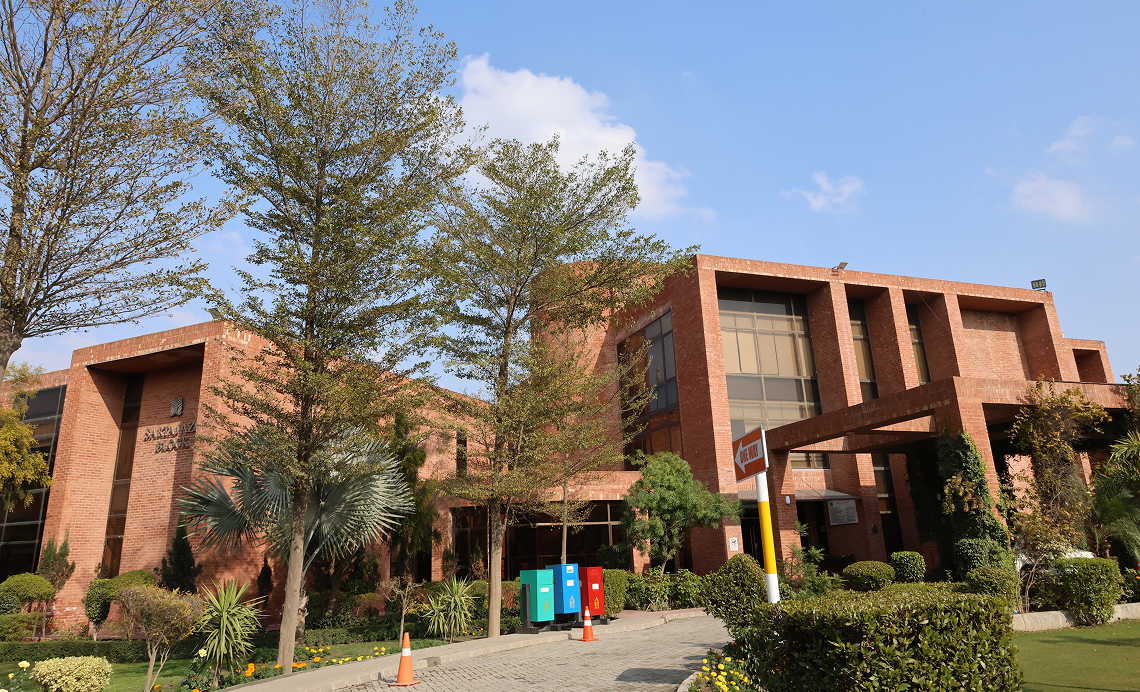
BNU's Fine Arts offering sits within the Mariam Dawood School of Visual Arts & Design (MDSVAD), one of the university's schools alongside architecture, liberal arts, media and mass communication, computer science, education, management sciences and psychology. MDSVAD runs four departments: Fine Arts, Textile, Fashion & Accessories Design, Visual Communication Design, and Interdisciplinary Studies.
At the undergraduate level, the Department of Fine Arts at MDSVAD offers a single degree: BFA Visual Arts. The department describes itself as letting students cut across disciplines, research, archive and question existing methods of art-making, rather than pushing them toward one fixed technique.
The Artistic Disciplines Covered in BNU's BFA Visual Arts
Students in the program can build their practice around one or more of these disciplines, as listed by BNU:
- Drawing
- Painting
- Photography
- Sculpture
- Performance Art
- Installation Art
- Video Art
Studio electives let students go deeper into a specific medium. Course offerings have included color theory applied to painting, sculptural work with the human body as subject, video and lens-based media beyond the flat screen, and photography framed around identity and mindfulness.
Theory electives sit alongside these, covering topics such as the history and politics of pigment in art, art under colonialism, and transcultural identity in contemporary art practice.
This mix gives students room to specialize in a medium while still engaging with the ideas and history behind contemporary art and visual culture.
Applying to BNU: what Fine Arts applicants need to know
BNU's minimum academic requirement for BFA Visual Arts is F.A/F.Sc or an equivalent qualification with 50% marks. For O Level and A Level applicants, BNU asks for eight pass subjects at O Level and three pass subjects at A Level, along with HSD or IB equivalence where applicable.
Meeting the academic minimum doesn't guarantee a seat. Admission decisions also depend on an admission test and an interview conducted by the department.
The admission test for MDSVAD is online and open-book, and applicants get 24 hours to complete it. It covers reading comprehension, visual comprehension, general knowledge and research skills.
Applications go through BNU's online admission portal. Applicants complete the form, pay a non-refundable processing fee, then upload attested copies of their educational documents. Once BNU receives these, it issues instructions for the entrance test.
Funding your Fine Arts degree: scholarships available at BNU
BNU runs several scholarship categories that Fine Arts applicants can apply for, alongside applicants from its other schools:
- VC Scholarship: 100% tuition coverage for applicants with 3A* at A Level, or 90% or above at Intermediate level, submitted with a personal statement.
- Dean's Scholarship: 100% tuition coverage, assessed on a weighted mix of Matric/O Level results, Intermediate/A Level results, and the admissions test, interview and portfolio, with demonstrated financial need as a prerequisite.
- Merit-Based Scholarship: up to 75% tuition coverage, tied to Intermediate or A Level results.
- Need-Based Scholarship: up to 50% tuition coverage for students from low-income families, renewed each semester if the student keeps a 2.65 CGPA.
- Sports Scholarship: 50% tuition coverage for two male and two female applicants who've won medals at national or provincial level.
- Transgender Inclusion Scholarship: 50% tuition coverage for two selected applicants, plus a hostel stipend for out-of-station students.
- BNU Institutional Support: 25% tuition coverage for students coming from public sector, non-profit or trust schools, with a minimum CGPA requirement to retain it.
- NEST Scholarships for Arts & Culture: a competitive, government-linked scholarship offering a full tuition and hostel fee waiver for eligible undergraduate students at MDSVAD, among other schools.
Fine Arts students at BNU can also apply for donor-funded scholarships, including the Madanjeet Singh Art Scholarships through the South Asia Foundation, which fund students from across South Asia, and the Rahimeen Ahmad Scholarship Fund, which covers a full undergraduate degree for at least one female student on an ongoing basis.
Eligibility rules, submission windows and coverage percentages change from year to year, so confirm current details on BNU's official scholarships page before applying.
Beyond the classroom: student facilities and support at BNU
Fine Arts study extends past the studio, and BNU's student support covers a wider set of needs. This includes the Student Affairs Office, a Counseling Center, the IT Resource Center, the university Library, on-campus hostels, a Health Center, a Cafeteria & Resource Center, and a range of societies, clubs and sports activities.
BNU also runs a Career Development Center, which supports students working toward life after graduation, including students moving from a Fine Arts degree into professional or creative work.
Career Directions for Fine Arts Graduates
A Fine Arts degree doesn't lock graduates into one job title. Based on the range the HEC's Fine Arts curriculum outlines, and the disciplines covered in programs like BNU's BFA Visual Arts, graduates often move toward work as:
- Practicing artists and painters
- Photographers
- Sculptors and installation artists
- Video artists
- Art educators
- Curators
- Creative practitioners working across galleries, museums and cultural institutions
Some graduates build an independent studio practice. Others move into education, curatorial work, or creative roles across galleries, cultural institutions and the wider creative industries.
BNU's BFA Visual Arts includes a Professional Practices course in its final semester, which covers running a studio, entering residencies, handling commissions and organizing exhibitions, preparing students for these paths directly.
FAQs
Is BNU a university students can consider for Fine Arts in Pakistan?
Yes. We run a dedicated BFA Visual Arts program through the Mariam Dawood School of Visual Arts & Design, one of BNU's founding schools.
What Fine Arts degree does BNU offer?
We offer a Bachelor of Fine Arts (BFA) in Visual Arts, run through the Department of Fine Arts at MDSVAD.
How long is the BFA Visual Arts program at BNU?
The program runs for four years across eight semesters, totaling 144 credit hours.
What artistic disciplines are covered in BNU's BFA Visual Arts?
Students can work in drawing, painting, photography, sculpture, performance art, installation art and video art.
What are the Fine Arts admission requirements at BNU?
We require F.A/F.Sc or an equivalent qualification with 50% marks, or eight pass subjects at O Level with three pass subjects at A Level. Admission also depends on our entrance test and an interview with SVAD faculty.
Does BNU offer scholarships for Fine Arts students?
Yes. We offer several scholarship categories, including merit-based, need-based, Dean's, VC, sports and institutional support scholarships, plus donor-funded scholarships for Fine Arts and Visual Arts students.
What facilities are available to Fine Arts students at BNU?
Our students have access to the campus library, IT Resource Center, hostels, health center, counseling services, and a Career Development Center, alongside societies, clubs and sports.
What is MDSVAD at BNU?
MDSVAD stands for the Mariam Dawood School of Visual Arts & Design. It's the school at BNU that runs our Fine Arts, textile, fashion, accessories and visual communication design programs.
How can students apply to BNU for Fine Arts?
We handle admissions through our online portal. Applicants submit the form, pay the processing fee, upload attested documents, then complete our admission test and interview.